

artwork
The eye that saw what it did not want to see.
artist
Marzena Ewiak
see artist profile
technical data
- dimensions
- 160 × 120 cm
- technique
- expression/putty knife/personal technique/two-layer
- substrate / material
- canvas/plexiglass/acrylic/acrylic markers/
- year
- 2025
about the artwork
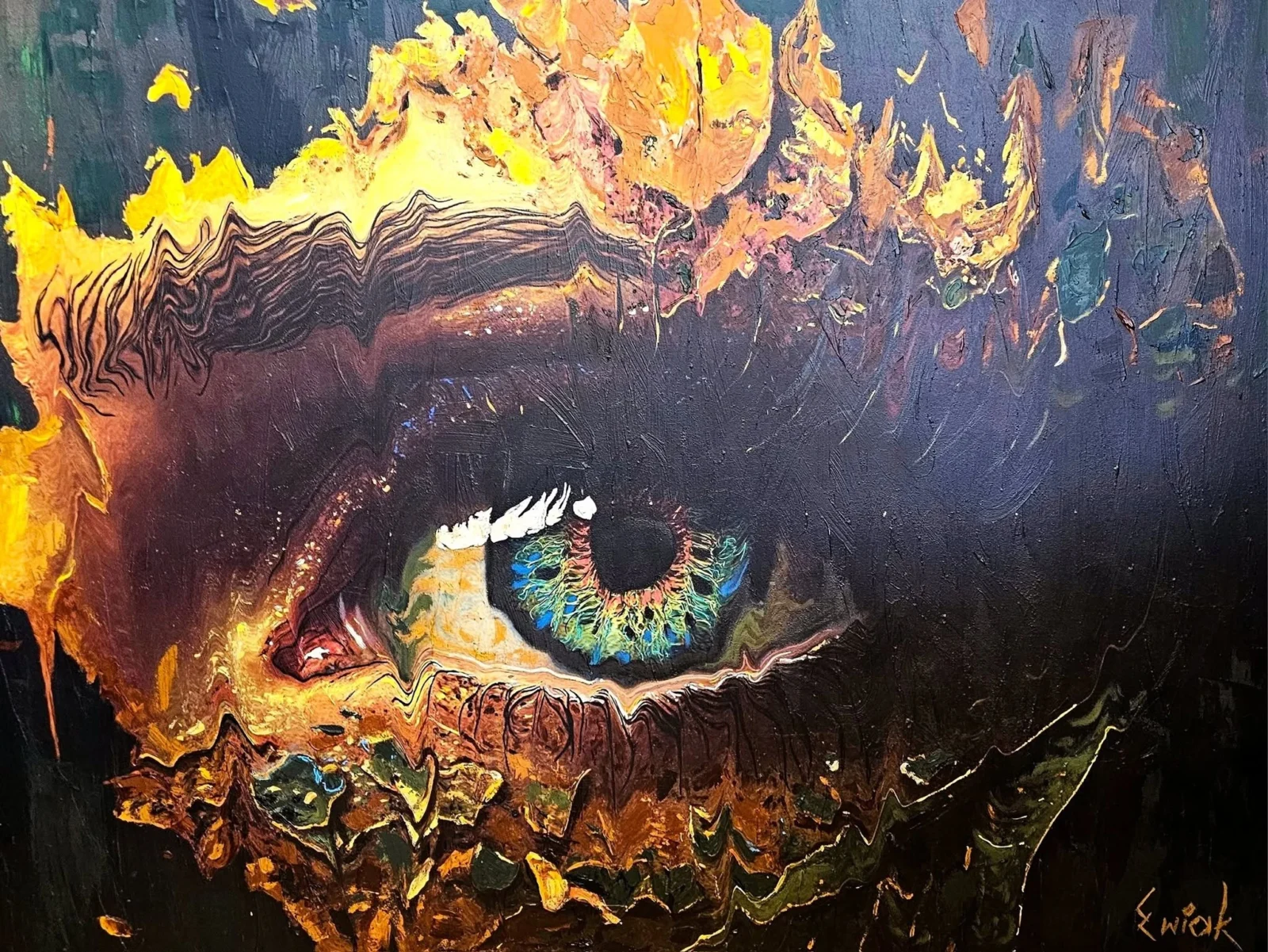
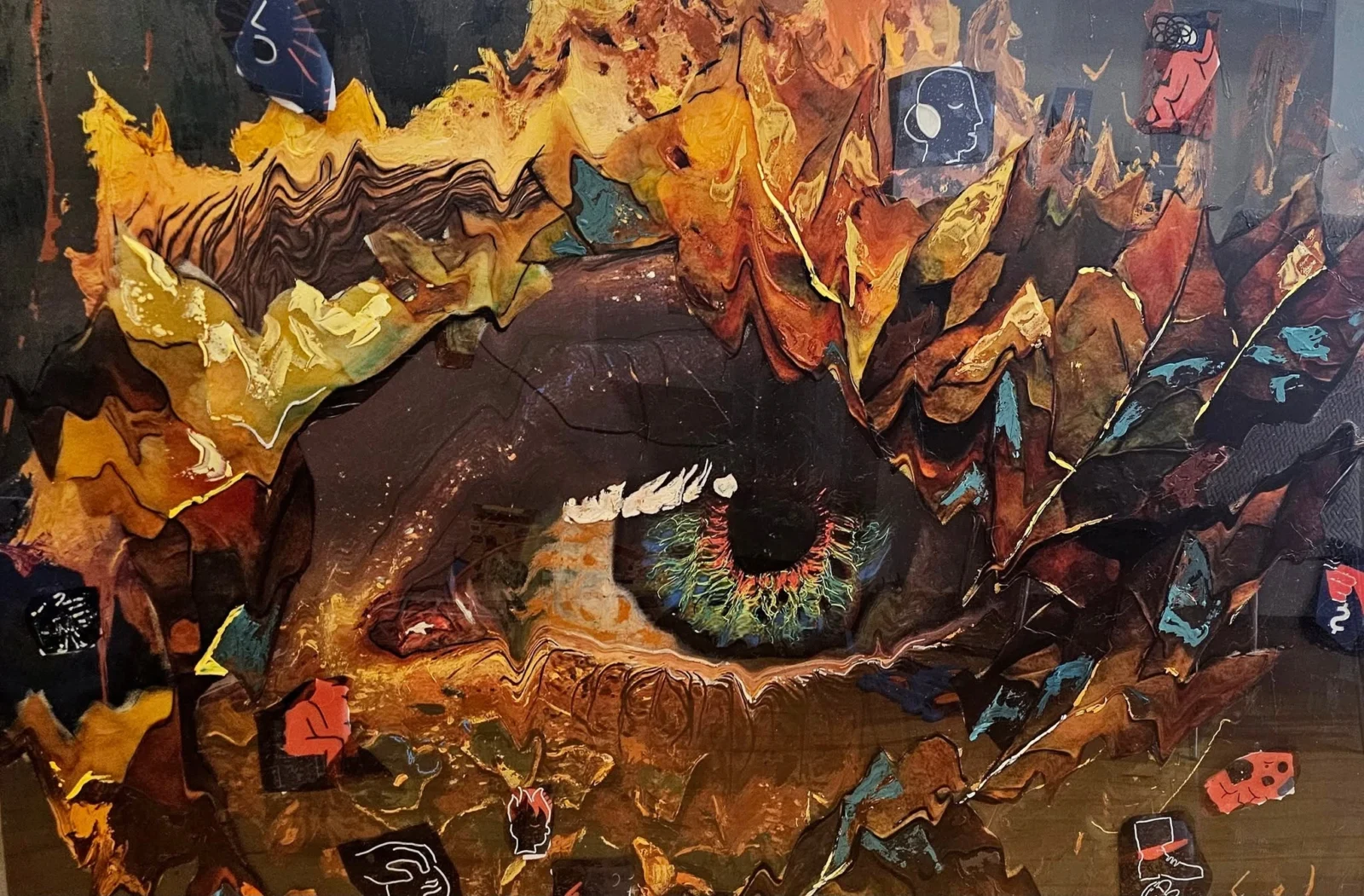
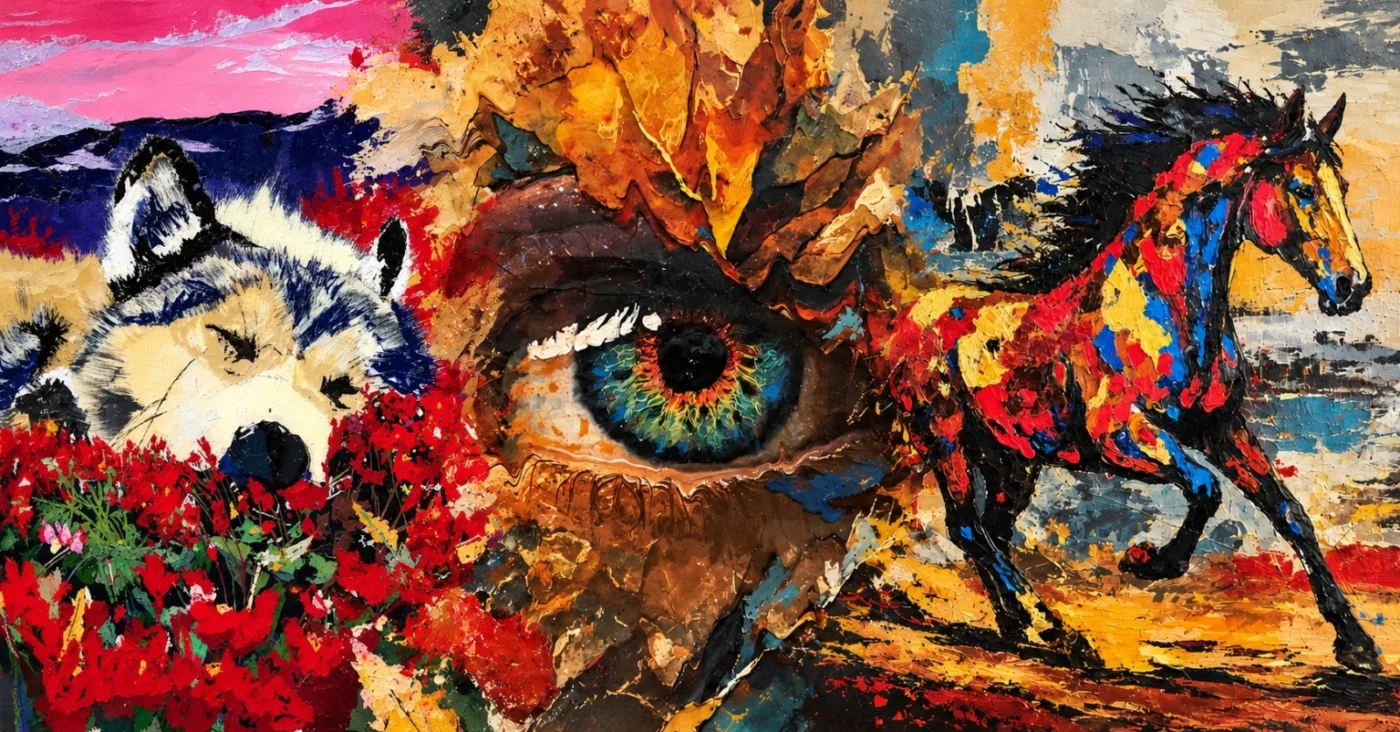
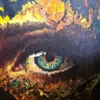
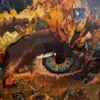
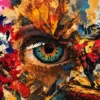
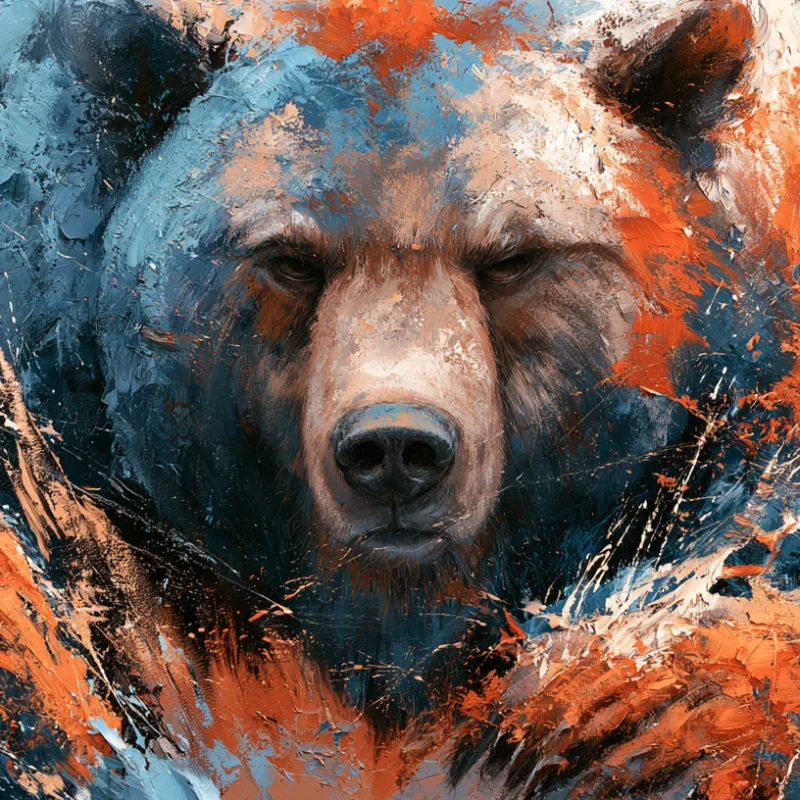
The painting depicts a mesmerizing human eye emerging from deep darkness, surrounded by an expressive paint texture reminiscent of flames, cracked earth, and irregular organic forms.
The focal point of the composition is the intensely colored iris, in which shades of turquoise, blue, green, gold, and red intermingle. Its extraordinary luminosity contrasts with the nearly black surroundings, lending the gaze an air of mystery and magnetic power.
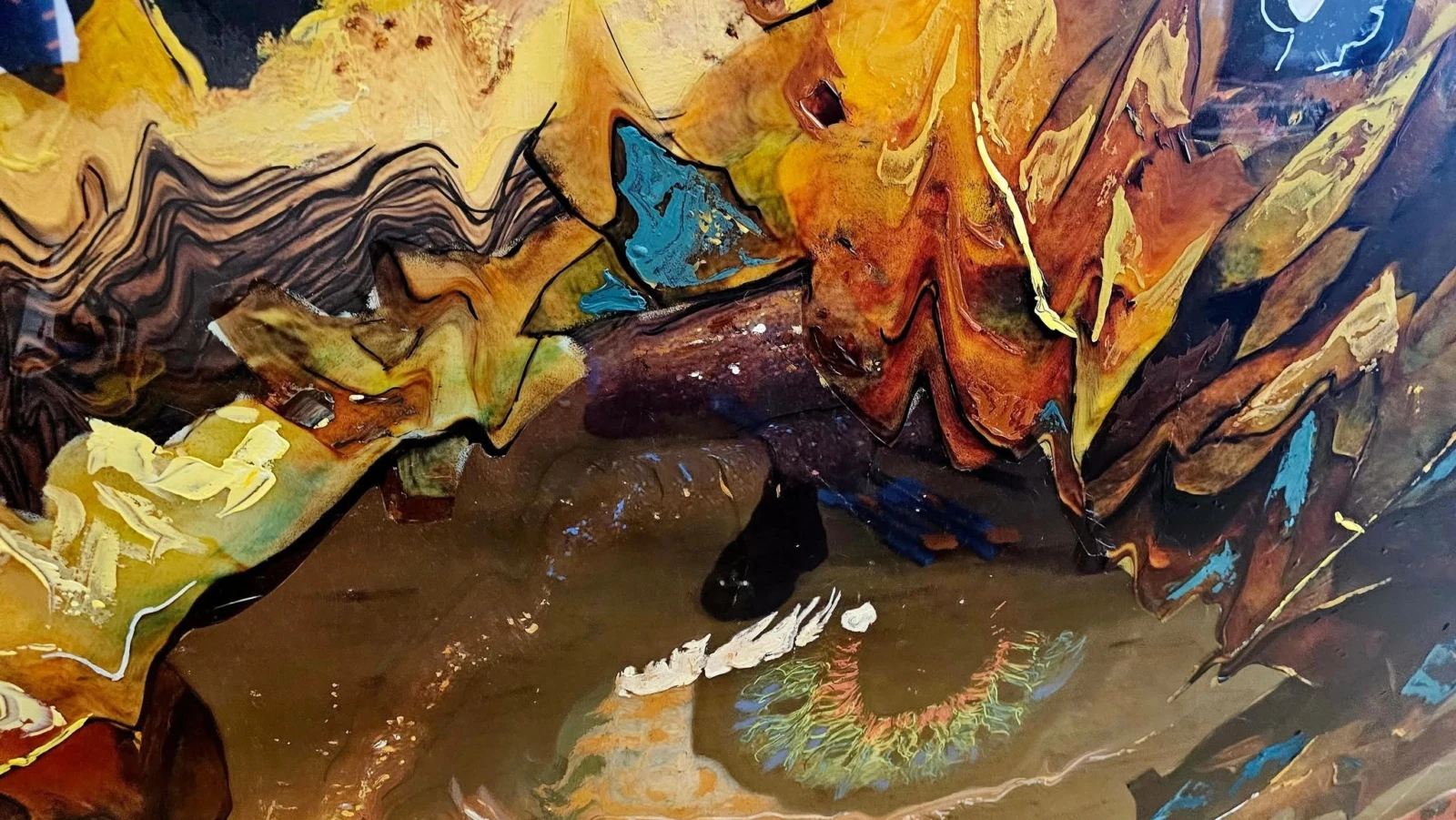
Dynamic, broad strokes of the palette knife and a rich, almost sculptural texture create an impression of constant movement. The dominant browns, ochres, golds, and fiery oranges build an atmosphere of tension, energy, and inner restlessness.
The eye becomes a symbol of consciousness, intuition, and the ability to perceive what lies hidden beneath the surface of reality. It is not merely an organ of sight, but a metaphorical window into human emotions, memories, and secrets.
The contrast between the darkness and the intense light of the iris may symbolize the search for truth, awakening, and inner transformation.
This work straddles the line between figurative painting and abstraction, where realistic detail meets the unbridled expression of the painterly medium.
In the first version of the painting, small, symbolic figures and signs also appear, introducing themes of the contemporary world, human behavior, and observations of reality. The second version, stripped of these elements, focuses exclusively on the power of the gaze and the emotional impact of color and texture.
The painting is a moving story of violence and suffering, but also of strength, awakening, and liberation. Its focal point is the human eye—a symbol of a witness to traumatic experiences that cannot be erased from memory.
It is an eye that saw what it never wanted to see. An eye that remained silent out of fear, wept in solitude, and remembered more than a person could ever put into words.
The darkness surrounding it—deep browns, black, and jagged, almost burning textures—symbolizes pain, fear, chaos, and the emotional wounds left by violence. Thick layers of paint applied with a putty knife resemble scars—traces of experiences that remain forever part of human history.
Yet at the very center of the darkness lies an extraordinarily colorful iris. Intense blues, greens, turquoises, and gold become a symbol of life, hope, and a reclaimed identity. It is a light that violence has failed to extinguish.
The eye is no longer merely a symbol of suffering. It becomes a symbol of courage, awareness, and the decision to break free from violence. It looks straight ahead, does not avert its gaze, and no longer wishes to hide the truth.
The two versions of the painting can be interpreted as two stages of the same story. The first, enriched with small figures and symbols, tells of a world of violence—its mechanisms, the people involved, and the traces it leaves behind. The second, stripped of these elements, focuses on the person herself—her experiences, her reclaiming of her own voice, and her path to freedom.
This is not a painting solely about violence. It is, above all, a painting about emerging from it. About the moment when fear begins to give way to courage, silence turns into a voice, and a person regains the right to their own life.
“I saw what I didn’t want to see. Today, I no longer close my eyes. I look ahead—toward freedom.”
artist